

-
Becoming a Pilot
-
Already a Pilot
-
Flight Instructor
- Pro / Turbine
- Aviation Maintenance
- Aviation Educators
- Why Choose King Schools


What's in a Pilot's Flight Bag?
How to Become a Pilot
- Getting Your FAA Medical Certificate
- Where Will You Learn?
- Choosing Your Instructor (CFI)
- Student Pilot Certificate, Flight Time & Aviation Scholarships
- Pilot Ground School & Knowledge Exam
- What’s in a Pilot’s Flight Bag?
- Maneuvers & Your First Solo
- Advanced Maneuvers & Your First Solo Cross-Country
- 4 Money-Saving Tips
- Acing Your Private Pilot Checkride
- You’re a Private Pilot - What’s Next?
In this video, we will discuss essential cockpit gear such as your aviation headset, E6B, charts, and iPad or Tablet running Foreflight/Garmin Pilot.
Essential Gear for Student Pilots: What You Need and Why It Matters
This installment of the How to Become a Pilot series highlights the essential gear every new pilot should consider. For students who enjoy buying equipment and gadgets, flight training offers plenty of opportunities to invest in tools that improve safety, confidence, and convenience in the cockpit.
Choosing the Right Headset
Your headset is arguably the most important piece of personal equipment you will buy as a student pilot. Airplanes produce significant noise, and a quality headset protects your hearing while ensuring clear communication with air traffic control, other pilots, and your instructor.
You will encounter two categories of aviation headsets:
Passive noise reduction (PNR):
These headsets use physical insulation, such as foam and sound-deadening materials, to block noise.
Active noise reduction (ANR):
These headsets electronically cancel ambient noise using anti-noise technology. ANR models require batteries, so it is wise to carry spares during every flight.
Selecting between PNR and ANR comes down to your personal preferences and long-term flying goals. Many pilots find that ANR headsets meaningfully reduce fatigue and increase situational awareness. Trying out different models through rentals or borrowing can help you choose the right fit.
The E6B Flight Computer
The E6B flight computer has been a pilot’s companion for decades. Originally used by the Army Air Corps in the 1940s, this circular slide rule allows pilots to calculate ground speed, estimated time en route, fuel burn, and wind correction. The tool is versatile and can be operated with one hand, making it practical for in-flight use.
However, the manual E6B requires practice. To help you learn, King Schools offers a free YouTube series that demonstrates how to use the device effectively.
Electronic E6Bs are also available. They are easier to operate but depend on batteries. Some examiners prefer that students demonstrate proficiency with the manual version during a checkride, so it is wise to start with the traditional tool. Reliable and affordable manual E6Bs are widely available.
Aviation Charts
Early in your training, you will work primarily with two types of aeronautical charts:
Sectional Charts:
These display large geographic areas and are used extensively during cross-country planning.
Terminal Area Charts (TACs):
These provide detailed views of complex airspace surrounding major metropolitan areas.
Both types of charts are updated on a six-month cycle. Keeping your charts current is essential to ensure that you have the latest information on airspace, frequencies, obstacles, and navigation features. Always check expiration dates and replace charts before flying.
Electronic Flight Bags (EFBs)
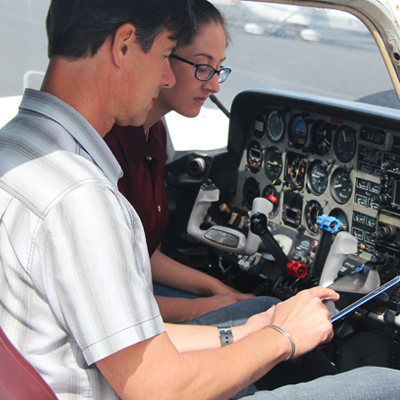
Many pilots eventually adopt an Electronic Flight Bag, commonly used on an iPad or other tablet. EFBs provide a powerful suite of tools for flight planning, navigation, charts, performance calculations, and more. Some pilots use them to supplement traditional tools, while others rely on them extensively.
Before purchasing an EFB setup, discuss it with your CFI. Together, you can determine the right hardware and software for your type of training. A common configuration is a 12-inch iPad running ForeFlight, but multiple options exist. Whatever you choose, make sure you receive training on using the device efficiently in flight.