

-
Becoming a Pilot
-
Already a Pilot
-
Flight Instructor
- Pro / Turbine
- Aviation Maintenance
- Aviation Educators
- Why Choose King Schools

Maneuvers & Your First Solo
How to Become a Pilot
- Getting Your FAA Medical Certificate
- Where Will You Learn?
- Choosing Your Instructor (CFI)
- Student Pilot Certificate, Flight Time & Aviation Scholarships
- Pilot Ground School & Knowledge Exam
- What’s in a Pilot’s Flight Bag?
- Maneuvers & Your First Solo
- Advanced Maneuvers & Your First Solo Cross-Country
- 4 Money-Saving Tips
- Acing Your Private Pilot Checkride
- You’re a Private Pilot - What’s Next?
In this video, learn about basic maneuvers, more advanced maneuvers, and your first solo. Some of the maneuvers covered include Ground Reference maneuvers, Slow Flight, Steep Turns, Stalls, and advanced landings.
Flight Maneuvers and Your First Solo
In this week’s episode of How to Become a Pilot, we're exploring flight maneuvers and one of the most exhilarating parts of learning to fly: soloing. The first time you solo as Pilot in Command (PIC) will become one of your fondest memories, so let’s dive in.
The Four Basic Maneuvers
From the start, you'll learn that everything in flying boils down to just four basic maneuvers:
Climbs, descents, straight and level flight, and turns. Any complex maneuver is just a combination of these four.
During your training, you'll master these basics and then gradually combine them to perform more advanced maneuvers:
Ground Reference Maneuvers
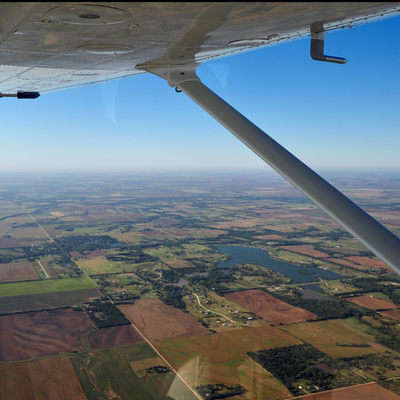
You’ll also develop skill at ground reference maneuvers, including rectangular patterns, S turns, turns around a point
These help you use the ground as a reference, adjust for wind, and maintain control as you prepare for landing practice. King Schools has a free course specifically for these maneuvers.
Slow Flight, Steep Turns, and Stalls
Slow Flight
Slow flight is crucial for landing practice, since every landing ends in slow flight. It is also one of the most challenging maneuvers as you get a feel for how an airplane behaves at very slow speeds.
Steep Turns
In steep turns, you'll learn how to bank your airplane up to 45 degrees and turn precisely. It is exhilarating, like riding a fast-moving merry-go-round, but you are the one in control.
Stalls
A stall occurs when the wing no longer produces lift, usually because the angle of the wing is too high relative to the wind.
You should not be intimidated by this maneuver. Once you understand that the airplane is designed to recover on its own, it becomes routine. Usually, all you need to do is lower the nose, add some power, let the airspeed increase, and you’re back to normal.
Improving Landings
As you work on these maneuvers, you’ll also start polishing your landings. At first, you may not be happy with them, but with good instruction and practice, you’ll start landing smoothly and without stress.
Personally, this is one of my favorite parts of flying. Coming back from a great flight and touching down with just a chirp of the tires is a wonderful feeling. You’ll understand what I mean soon.
King Schools has a great free course about landings.
Pre Solo Test
After working on maneuvers and landings for a while, your CFI will administer a pre solo test. Pass this test and call your mom: you’re ready to solo.
Your First Solo
The big day of the solo may go like this: After some warm-up flying, your instructor will step out, and it'll be just you and the airplane. You'll then take off, and fly the airport pattern for a bit. After a few laps around the airport, you will land and taxi back to the parking spot - grinning until your face hurts. The feeling of accomplishment when you finish your first flight as a solo pilot is indescribable. You’ve done it. You’re now a Pilot in Command.